
Express Transport to Turkey: Choosing the Right Urgency Level
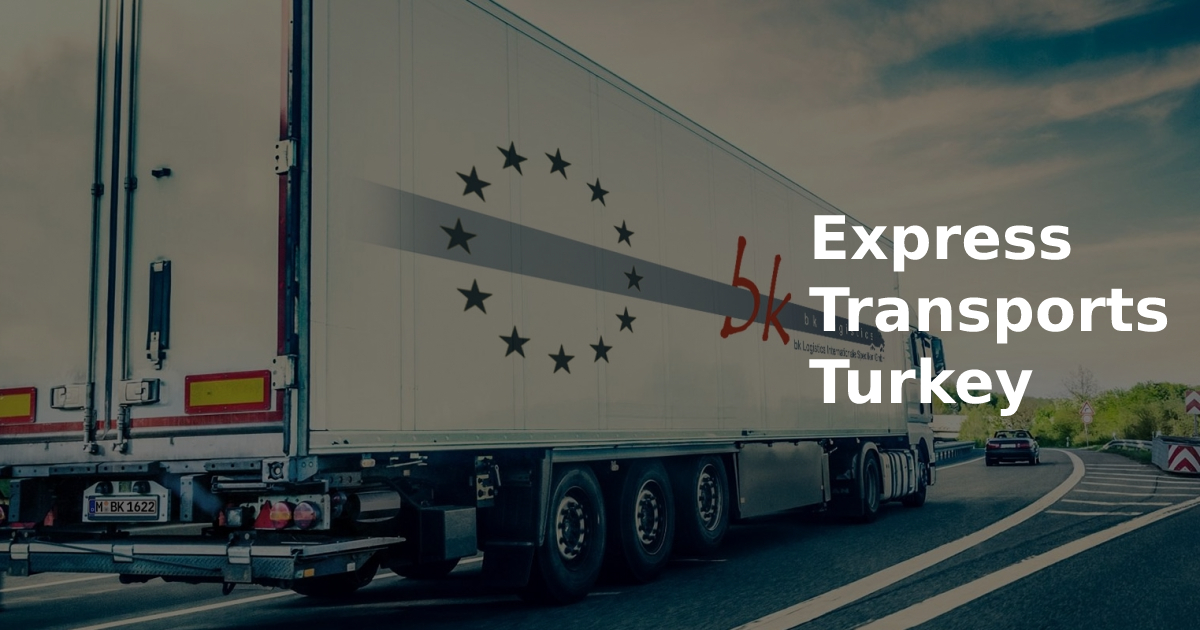
Some shipments cannot wait for the standard delivery time: a factory whose production is about to stop, a project with an approaching deadline or an order that has been promised to a customer all require the cargo to arrive quickly. Express transport is an approach focused on shortening the time.
In this article you will find when express transport to Turkey is needed, how the urgency level is determined, how the cargo is prepared, how time is gained in documents and customs, how route and vehicle are chosen and how to balance speed and cost.
Table of Contents
- In Which Situations Is Express Transport Needed?
- How Are Urgency Levels Determined?
- How Is the Cargo Prepared for an Express Shipment?
- How Is Time Gained in Documents and Customs Procedures?
- How Are Route and Vehicle Chosen in Express Transport?
- How Are Cost and Speed Balanced?
- How Are Communication and Tracking Handled During an Express Shipment?
- Frequently Asked Questions
In Which Situations Is Express Transport Needed?
Express transport is needed when delivery time is the most important element of the shipment. A missing spare part on the production line, an order that must arrive in a short time or a fixed schedule such as a trade fair or project date are examples.
Not every urgent shipment has to be an express one. What matters is to assess correctly the damage a delay would cause. If a delay causes only a short-term inconvenience, standard transport may be enough; if there is a risk of production stoppage or a penalty, an express solution makes sense.
When making this assessment, the size of the cargo also matters. For small and light cargo, fast options are easier to find, while for large and heavy cargo express transport requires more planning.
How Are Urgency Levels Determined?
The most practical way to determine urgency is to clarify by which date the cargo must be at the destination. This date directly affects the transport type and vehicle plan. If the date is flexible, a more economical plan is chosen; if it is fixed, a faster one.
Urgency levels can broadly be divided into three: planned, priority and very urgent. For planned shipments, route and time are flexible. For priority shipments, loading and delivery are followed more closely. For very urgent shipments, the vehicle is assigned directly from load to load and intermediate stops are kept to a minimum.
Choosing the right level saves both time and cost. Choosing a higher urgency than necessary creates unnecessary cost; choosing one that is too low increases the risk of delay. Therefore how flexible the delivery date really is should be discussed from the start.
When deciding, also think about the value the cargo has for you. A part that could stop production and an ordinary stock replenishment should not be handled with the same urgency.
How Is the Cargo Prepared for an Express Shipment?
In fast shipments, most of the time is often lost in the preparation phase. If the cargo is not ready, the vehicle has to wait. Therefore the goods must be packed, labelled and gathered at a point ready for loading before the loading day.
Information on the dimensions and weight of the cargo must be correct. Wrong information can lead to the wrong vehicle choice and lost time during loading. For palletised cargo, the number and dimensions of pallets should also be communicated in advance.
Having a responsible person at the loading point and immediate access to the cargo when the vehicle arrives also shortens the time. When the gate, ramp and loading hours are checked beforehand, the likelihood of waiting decreases.
In addition, whether the cargo is sensitive must be communicated beforehand. If the protection required for fragile goods has to be arranged only at loading, the time is extended.
How Is Time Gained in Documents and Customs Procedures?
In express shipments, a document delay can cost more than the time lost on the road. Invoice, packing list and freight documents must be ready before the loading day, and their contents must be consistent with each other.
Which documents are required depends on the type of cargo and the current legal situation. Therefore when planning an express shipment, the current document list should be requested from the start, and missing documents must not be left to the loading day.
Keeping digital copies of the documents ready makes it possible to respond quickly to information requested at the border or at customs. This small measure can reduce waiting time noticeably.
It is also useful to share the contact details of the person following the customs procedure; this way a question can be answered immediately.
How Are Route and Vehicle Chosen in Express Transport?
In express transport, the route is chosen not only as the shortest but as the one with the fewest interruptions. Factors such as heavy traffic, roadworks and waiting times at the border crossing determine the route and the departure time.
The vehicle is chosen according to the size of the cargo and the urgency. For small cargo a more agile vehicle can be preferred, for large cargo a vehicle making a direct trip. The fewer transfers there are, the shorter the time and the lower the risk of damage.
Where possible, carrying the cargo in a single vehicle without intermediate stops saves time. In part-load transport, the loading and unloading stops of other cargo can extend the time; therefore a direct trip is more suitable for very urgent shipments.
How Are Cost and Speed Balanced?
Express transport is generally more expensive than standard transport, because the vehicle has to be reserved for your cargo and organised quickly and planned flexibly. Therefore the price must be evaluated not only as a number but together with the time it saves.
To protect the budget, it is important to set the urgency according to the real need. In some cases, sending part of the cargo by express and the rest by standard transport can balance both time and cost.
When requesting an offer, be sure to ask what is included in the price. When items such as loading time, waiting time, document handling and insurance are clearly listed, additional costs later on are avoided.
When making the transport decision, also take the cost of delay into account. Often the cost of a production stoppage or a missed delivery is higher than the express surcharge.
How Are Communication and Tracking Handled During an Express Shipment?
In express shipments, the flow of information is as important as speed. When the cargo was loaded, when it reaches the border and the estimated arrival time must be communicated to those concerned in time.
At the delivery point, the person who will receive the cargo must be determined and reachable. If the recipient is not ready when the driver arrives, the time gained can be lost at handover.
If an unexpected delay occurs, informing those concerned early enables alternative plans to be made quickly. When reasons such as weather, traffic or border congestion are communicated in advance, the plans on the recipient’s side can also be updated.
When you share your request and the details of your cargo, we can create the suitable express plan together.
Frequently Asked Questions
What is the difference between express and standard transport?
In express transport the vehicle is reserved primarily for your cargo, intermediate stops are reduced and planning is done according to speed. Standard transport offers more flexible timing and a more economical plan.
How long does express transport take?
The duration depends on distance, size of the cargo, document status and border formalities. The exact time is stated in the offer after the cargo details have been shared.
Can I send part of my cargo by express?
Yes. Sending the urgently needed part by express and the rest by standard transport is one way to balance time and cost.
Which documents are needed for express shipping?
As a rule, invoice, packing list and freight documents are requested; depending on the type of cargo, further documents may be needed. It is recommended to ask for the current list before the shipment.
How can I get an offer?
It is enough to provide the type, size and weight of the cargo, the loading and destination points and the latest delivery date. An individual offer is prepared on this basis.